A recent 8–1 Supreme Court ruling has sparked national conversation for its significant impact on Temporary Protected Status (TPS), a program created to safeguard foreign nationals whose home countries face dangerous or unstable conditions. The Court overturned a lower court injunction, reaffirming that TPS decisions fall squarely within the executive branch’s authority over immigration and foreign policy. While the ruling focuses on legal interpretation rather than individual outcomes, it marks an important shift in how the program’s oversight is understood.
For the hundreds of thousands of people who have built lives under TPS, the decision carries emotional and practical weight. Many recipients have spent years living, working, and raising families in the United States. They have started businesses, pursued education, and woven themselves into local communities—all while relying on the program’s temporary protections. For these households, TPS has provided not just legal status, but a sense of stability and belonging amid uncertain global circumstances.
The Supreme Court’s ruling does not change any person’s status directly. Instead, it returns key decision-making power to federal agencies and policymakers, who must now determine whether existing TPS designations should be extended, modified, or allowed to expire. Supporters of the ruling see it as a clarification of roles, emphasizing that it is the executive branch—not the courts—that is responsible for shaping and managing immigration policy.
However, the ruling has also raised concerns about the uncertainty that may follow. Families who have relied on TPS for years now face renewed anxiety as agencies weigh their next steps. Advocates worry that policy shifts could disrupt communities and destabilize lives built in good faith under the program. As the national conversation continues, the decision underscores the complex challenge of balancing legal boundaries with humanitarian considerations—while searching for long-term solutions within an ever-changing immigration landscape.

Related Posts

The Deadly Ingredient Hiding in Your Kitchen: Why That Bitter Taste Could Be a Fatal Warning
You may think you’re serving a healthy, home-cooked meal, but an unusually bitter taste could signal something more serious than bad seasoning. Food safety experts warn that…

Viewers Spot a Subtle Detail in Coca-Cola’s Iconic Logo
Some people have noticed that the second “C” in the Coca-Cola logo looks like a smile—and once you see it, it’s hard to ignore. The familiar red-and-white…

A Viral ICU Rescue Clip Wasn’t What It Seemed
A tense hospital video recently spread across social media, showing what appeared to be a nurse rushing to save an unconscious patient in an intensive care setting….

‘Most beautiful girl in the world’ Thylane Blondeau marries French DJ in fairytale Paris wedding
Thylane Blondeau was six when the world decided how she should look. Now 25, she has stepped into a new chapter—one defined on her own terms. Once…

I found this tiny white stick in my son’s room and was too embarrassed to ask him does anyone know what it is?
What I thought was a mysterious gadget turned out to be something surprisingly ordinary. After searching online and comparing photos, I discovered it wasn’t a vape, hidden…
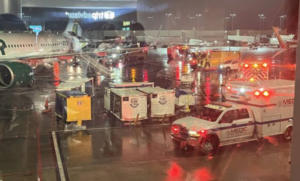
Charlotte Airport Faces Flight Delays Followin
Operations at Charlotte Douglas International Airport experienced temporary delays after a Frontier Airlines aircraft was involved in an unusual ground servicing incident before departure. Although the event…