The Senate has just ‘stripped’ away one of Trump’s key powers, although it may not be so simple
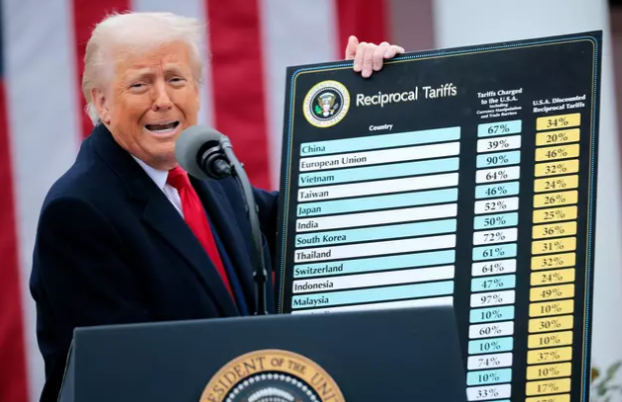
The Senate has voted to remove Donald Trump’s authority to impose tariffs, pushing back against the reciprocal tariffs he placed on over 100 countries earlier this year.
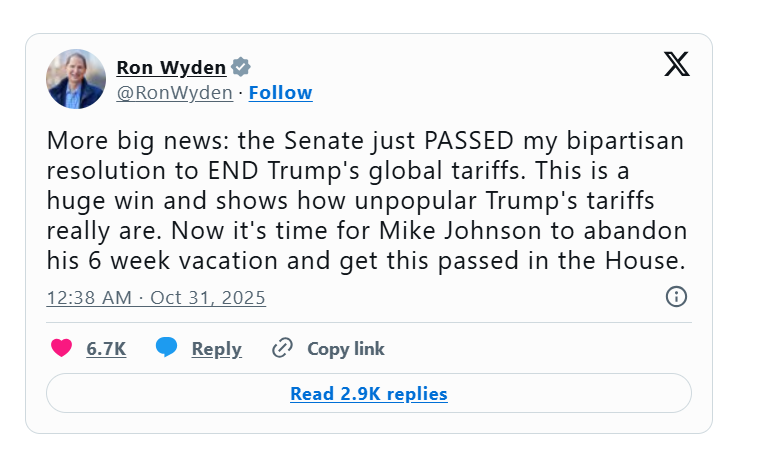
The resolution, introduced by Senator Ron Wyden of Oregon, aims to end “the national emergency declared to impose global tariffs” last April — an action Wyden referred to as “Liberation Day.”
The measure passed in the Senate with a 51–47 vote, as Republicans Rand Paul, Mitch McConnell, Lisa Murkowski, and Susan Collins joined Democrats in supporting it.
Sharing the announcement on social media, Wyden hailed the outcome on Twitter as a ‘huge win,’ saying it ‘shows how unpopular Trump’s tariffs really are’.
Also, he called on House Speaker Mike Johnson to ‘end his six-week vacation and bring this to a vote in the House’.
Several prominent voices have quickly shared their thoughts on the decision.
Podcaster Brian Allen commented that “Trump’s hold on his own party is visibly weakening,” while political analyst Ed Krassenstein observed that “some Republicans still value the separation of powers.”
The account Democratic Wins called the outcome “amazing,” and another user on X (formerly Twitter) described it as a “victory for the Constitution” and “for the principle of co-equal branches of government.”
However, the celebrations might be premature. Earlier in March, the Republican-led House approved a rule preventing any vote to end Trump’s national emergency — the same authority that allowed him to impose the tariffs in the first place.
Tariffs raise the cost of imported goods, meaning that US consumers often end up paying more.
Small businesses in particular have reported increased costs and uncertainty since supply chains are global and rely on inputs from abroad, and tariffs disrupt that.
Earlier this year, Trump declared through the International Emergency Economic Powers Act that he would enact a base 10 percent tariff on countries across the globe.
In his executive order, he argued at the time that ‘national emergency arising from conditions reflected in large and persistent annual US goods trade deficits’ was a reason to pull the trigger on the tariffs.
Since then, senators have criticised the tariffs and made moves to put an end to his usage of emergency powers throughout the year.
Meanwhile, Trump has argued that the US has been ‘exploited ‘by foreign countries for far too long and that such aggressive protectionist policies will benefit US workers and consumers

Related Posts
Actor behind the original Geico Caveman speaks out – do you recognize him?
Most people find it annoying when ads start popping up while they watch their favorite film or series. The truth is that commercials can be boring, but…
Rep. Julia Brownley Announces Retirement, Opening a New Chapter in California Politics
The decision by Julia Brownley not to seek another term in Congress marks a significant transition for California’s political landscape and the Democratic Party. After years of representing a…
Republican Leaders Voice Support for Trump’s Iran Policy Amid Broader Debate
Several prominent Republican leaders have expressed support for former President Donald Trump and his approach toward Iran, framing their position as a matter of national security and strategic deterrence….
Trump Comments on Cases Involving Missing and Deceased Experts Amid Ongoing Questions
Former President Donald Trump has weighed in on recent speculation surrounding several cases involving missing or deceased scientists and government-linked experts, stating that he sees “not much of a…
🚨Photo Of Trump Family On Election Night Turns Heads After People Spot Small Detail!…
A single photo sparked widespread speculation. One smiling family image—missing Melania Trump—quickly ignited rumors and online debate. Some questioned whether her absence signaled tension. Others analyzed every…
Trump and Obama Exchange Highlights Growing Divide in Modern Political Discourse
A highly publicized exchange involving former Presidents Donald Trump and Barack Obama has reignited debate about the nature of political communication in the digital age. The encounter quickly attracted widespread attention…