We often mourn musicians and actors when they pass, but there are other public figures and heroes whose contributions deserve equal recognition.
Iain Douglas-HHamilton was one of those rare individuals.
The pioneering elephant conservationist has now died at the age of 83.
More than a zoologist, Douglas-Hamilton was the first to reveal to the world how elephants think, feel, choose, and grieve. His research reshaped global understanding of these animals and transformed conservation practices.
He passed away at his home in Nairobi on Monday, aged 83.
The impact he made was immediately clear from the tributes that poured in:
Prince William described him as “a man who dedicated his life to conservation and whose life’s work leaves lasting impact on our appreciation for, and understanding of, elephants,” adding, “The memories of spending time in Africa with him will remain with me forever.”
Charles Mayhew, founder of Tusk, put it simply: “The world has lost a true conservation legend today, but his extraordinary legacy will continue.”
From Dorset to the African savannah
Born in 1942 into an aristocratic family in Dorset, England, Douglas-Hamilton studied biology and zoology in Scotland and later at Oxford. At 23, he moved to Tanzania’s Lake Manyara National Park, where he began the groundbreaking work that would define his career.
There, he meticulously identified individual elephants by their ear patterns, wrinkles, and temperaments. As he later explained, “Nobody had lived with wildlife in Africa and looked at them as individuals yet.”
His early studies became the cornerstone of modern elephant conservation science.
Revealing the ivory crisis
During his research, Douglas-Hamilton soon realized he was documenting something far more devastating: widespread elephant poaching. He was charged by elephants, attacked by bees, and even shot at by poachers while tracking herds.
His aerial surveys exposed the scale of the slaughter — data that shocked the global community — and played a crucial role in achieving the 1989 international ban on the ivory trade.

Related Posts
Expert shares insight into Melania Trump’s beauty routine
Considered one of the most beautiful women, Melania Trump’s beauty routine is something many are eager to get an insight into as questions about whether she has…
Fox News host shares creepy speculation about Barron Trump’s sex life
Barron Trump has been rumored to have a girlfriend. While there has been no confirmation, lately, it was reported that he shut down an entire floor of…
This Boy Was Born With a Heart-Shaped Birthmark and Here is What He Looks Like Now…
Remember the baby with the heart-shaped red birthmark? Now that some time has passed, this adorable child has grown up! Has the unique mark faded, and what…
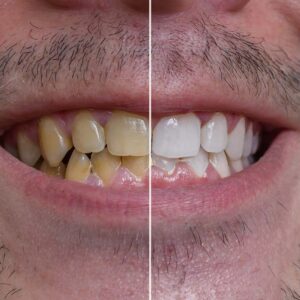
A Simple Method That May Help Reduce Yellow Stains and Plaque on Teeth
A bright smile is often associated with good oral hygiene and daily care. However, many people notice that over time their teeth can become yellow or develop…

Why There’s a Small Panel on Your Car’s Bumper
Most drivers have noticed the small square or rectangular panel built into the front or rear bumper of a car. At first glance, it does not seem…

That Tiny Hole in a Safety Pin Has a Very Useful Purpose
Most people have used a safety pin at some point, but few stop to notice the tiny hole at one end. It may seem like an unimportant…