Lawmakers are pressing for greater transparency after newly unredacted documents connected to Jeffrey Epstein’s case revealed additional names in federal records. The releases come as the U.S. Department of Justice continues to provide access to its Epstein-related archives, estimated at over three million pages, while protecting victims’ identities.
Representative Thomas Massie of Kentucky criticized excessive redactions, saying at least six names likely linked to criminal activity were improperly concealed, limiting public understanding of Epstein’s network and delaying accountability.
Deputy Attorney General Todd Blanche responded that most redactions are legally required to protect victims and private individuals. He emphasized that the DOJ has unredacted all non-victim names where permitted and remains committed to transparency.
Key individuals named in updated records include Ghislaine Maxwell, Epstein’s convicted associate serving a 20-year sentence for recruiting underage girls; Les Wexner, former CEO of Victoria’s Secret who severed financial ties after abuse allegations; Lesley Groff, Epstein’s former executive assistant who cooperated with authorities but faced no charges; and Jean-Luc Brunel, a French modeling agent arrested in 2020 and found dead in 2022 while awaiting trial.
A controversial 2009 email from Epstein referencing a “torture video” drew attention. Massie called for the recipient’s identity to be revealed. DOJ officials explained that the address was redacted under privacy rules; reporting later identified the recipient as Ahmed bin Sulayem, CEO of DP World. The meaning of Epstein’s reference remains unclear.
Several names in the files remain partially redacted. DOJ guidelines restrict disclosure of victim identities, personal contact information, and certain material protected under federal privacy laws. Lawmakers argue some rules are overly broad, while officials maintain they are legally bound.
The document releases have reignited debate about whether influential figures avoided scrutiny and how redactions were handled. Advocacy groups press for full disclosure, while others caution against releasing sensitive material that could retraumatize victims or unfairly implicate individuals.
Currently, Maxwell remains the only person convicted. No new criminal charges have arisen from the releases, and congressional review of unredacted materials continues under strict guidelines. The disclosures have intensified public and political scrutiny over federal management of Epstein’s records.

Related Posts

The Deadly Ingredient Hiding in Your Kitchen: Why That Bitter Taste Could Be a Fatal Warning
You may think you’re serving a healthy, home-cooked meal, but an unusually bitter taste could signal something more serious than bad seasoning. Food safety experts warn that…

Viewers Spot a Subtle Detail in Coca-Cola’s Iconic Logo
Some people have noticed that the second “C” in the Coca-Cola logo looks like a smile—and once you see it, it’s hard to ignore. The familiar red-and-white…

A Viral ICU Rescue Clip Wasn’t What It Seemed
A tense hospital video recently spread across social media, showing what appeared to be a nurse rushing to save an unconscious patient in an intensive care setting….

‘Most beautiful girl in the world’ Thylane Blondeau marries French DJ in fairytale Paris wedding
Thylane Blondeau was six when the world decided how she should look. Now 25, she has stepped into a new chapter—one defined on her own terms. Once…

I found this tiny white stick in my son’s room and was too embarrassed to ask him does anyone know what it is?
What I thought was a mysterious gadget turned out to be something surprisingly ordinary. After searching online and comparing photos, I discovered it wasn’t a vape, hidden…
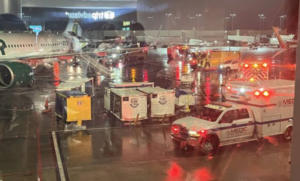
Charlotte Airport Faces Flight Delays Followin
Operations at Charlotte Douglas International Airport experienced temporary delays after a Frontier Airlines aircraft was involved in an unusual ground servicing incident before departure. Although the event…