The U.S. Supreme Court appears poised to narrow how federal courts enforce Section 2 of the Voting Rights Act, a move that could significantly reshape redistricting battles nationwide. At the center of the dispute is whether plaintiffs can continue bringing claims that allege racial vote dilution when race and partisanship are closely intertwined — a common reality in Southern states where Black voters overwhelmingly support Democratic candidates and white voters tend to favor Republicans. During re-arguments in Louisiana v. Callais, a conservative majority signaled openness to an approach advanced by the Trump Justice Department that would give states greater latitude to defend maps as partisan rather than racial decisions. Voting rights organizations warn that limiting Section 2 could allow Republican-led legislatures to redraw as many as 19 congressional districts in ways that strengthen their electoral advantage.
The case stems from Louisiana’s 2022 congressional map. A federal district court found the map likely violated Section 2 by concentrating Black voters — who make up roughly one-third of the state’s population — into just one majority-Black district out of six. In response, lawmakers adopted a revised map in 2024 creating a second majority-Black district. That remedial plan was then challenged by white voters, who argued it amounted to an unconstitutional racial gerrymander. A district judge agreed, setting up the dispute now before the Supreme Court.
The justices have requested new briefs addressing the constitutionality of Section 2 itself, raising concerns about broader changes. While conservative justices seemed reluctant to fully overturn the provision, they explored whether states could justify district lines based on partisan goals even when racial demographics overlap. Chief Justice John Roberts questioned how such an approach would align with past rulings like Allen v. Milligan and the longstanding Thornburg v. Gingles framework, which requires proof that minority voters are politically cohesive and consistently blocked by majority voting patterns.
Justice Brett Kavanaugh suggested that race-based remedies might be subject to time limits, referencing prior cases that treat such measures as temporary. Meanwhile, advocacy groups including Fair Fight Action and Black Voters Matter Fund argue that weakening Section 2 could reshape the balance of power in Congress, potentially solidifying Republican control of the House for years. Research identifies up to 27 seats that could be redrawn to favor Republicans, with 19 tied directly to possible Section 2 restrictions.
As the nation awaits the Court’s decision, some state lawmakers are considering their own voting protections. In Mississippi, Democratic legislators Zakiya Summers and Johnny DuPree have introduced proposals to create a state-level voting rights law, including a commission to review election changes and added protections for minority voters. The Supreme Court’s forthcoming ruling could therefore have sweeping implications not only for federal redistricting law but also for state-level voting reforms across the country.

Related Posts
Expert shares insight into Melania Trump’s beauty routine
Considered one of the most beautiful women, Melania Trump’s beauty routine is something many are eager to get an insight into as questions about whether she has…
Fox News host shares creepy speculation about Barron Trump’s sex life
Barron Trump has been rumored to have a girlfriend. While there has been no confirmation, lately, it was reported that he shut down an entire floor of…
This Boy Was Born With a Heart-Shaped Birthmark and Here is What He Looks Like Now…
Remember the baby with the heart-shaped red birthmark? Now that some time has passed, this adorable child has grown up! Has the unique mark faded, and what…
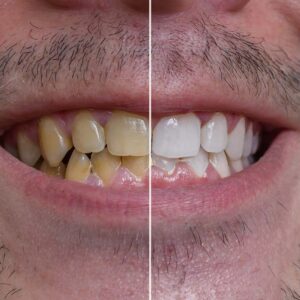
A Simple Method That May Help Reduce Yellow Stains and Plaque on Teeth
A bright smile is often associated with good oral hygiene and daily care. However, many people notice that over time their teeth can become yellow or develop…
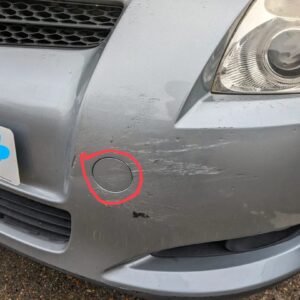
Why There’s a Small Panel on Your Car’s Bumper
Most drivers have noticed the small square or rectangular panel built into the front or rear bumper of a car. At first glance, it does not seem…
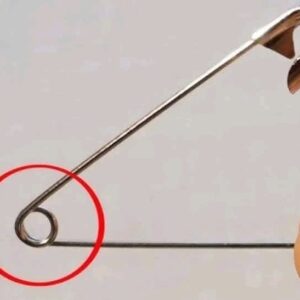
That Tiny Hole in a Safety Pin Has a Very Useful Purpose
Most people have used a safety pin at some point, but few stop to notice the tiny hole at one end. It may seem like an unimportant…