Robin Williams may be gone, but he’s far from forgotten.
But now, his daughter is speaking out against people using AI to bring her late father “back to life.”
“You’re not making art, you’re making disgusting, over-processed hotdogs out of the lives of human beings,” Zelda Williams writes in a powerful Instagram post.
”Please, just stop”
While there are many benefits of artificial intelligence, there’s one controversial use that has caused a lot of uproar. Using AI to replicate a person’s likeness, especially without their consent, may sound like something out of a science fiction movie, but it’s a modern day problem.
Zelda Williams, daughter of the late Robin Williams and director of the romantic comedy Lisa Frankenstein, has once again taken to Instagram to address this deeply personal issue. She’s urging fans to stop sending her AI-generated videos of her father, who passed away in 2014 at age 63.
“Please, just stop sending me AI videos of Dad,” Zelda wrote. “Stop believing I wanna see it or that I’ll understand, I don’t and I won’t. If you’re just trying to troll me, I’ve seen way worse, I’ll restrict and move on. But please, if you’ve got any decency, just stop doing this to him and to me, to everyone even, full stop. It’s dumb, it’s a waste of time and energy, and believe me, it’s NOT what he’d want.”

She didn’t hold back in criticizing how people are using AI to manipulate legacies. “To watch the legacies of real people be condensed down to ‘this vaguely looks and sounds like them so that’s enough,’ just so other people can churn out horrible TikTok slop puppeteering them is maddening,” Zelda continued. “You’re not making art, you’re making disgusting, over-processed hotdogs out of the lives of human beings, out of the history of art and music, and then shoving them down someone else’s throat hoping they’ll give you a little thumbs up and like it. Gross.”
Zelda finished with a sharp critique of the broader AI culture: “And for the love of EVERY THING, stop calling it ‘the future,’ AI is just badly recycling and regurgitating the past to be re-consumed. You are taking in the Human Centipede of content, and from the very very end of the line, all while the folks at the front laugh and laugh, consume and consume.”
This isn’t a new issue, as Robin Williams famously feuded with Disney after the mega corporation used his voice to sell merchandise for the 1992 hit Aladdin.
Prior to signing on to the movie, Robin made it clear he didn’t want his voice involved in any merchandising. However, once the film became a hit Disney went behind the comedian’s back and used his voice to promote the film.
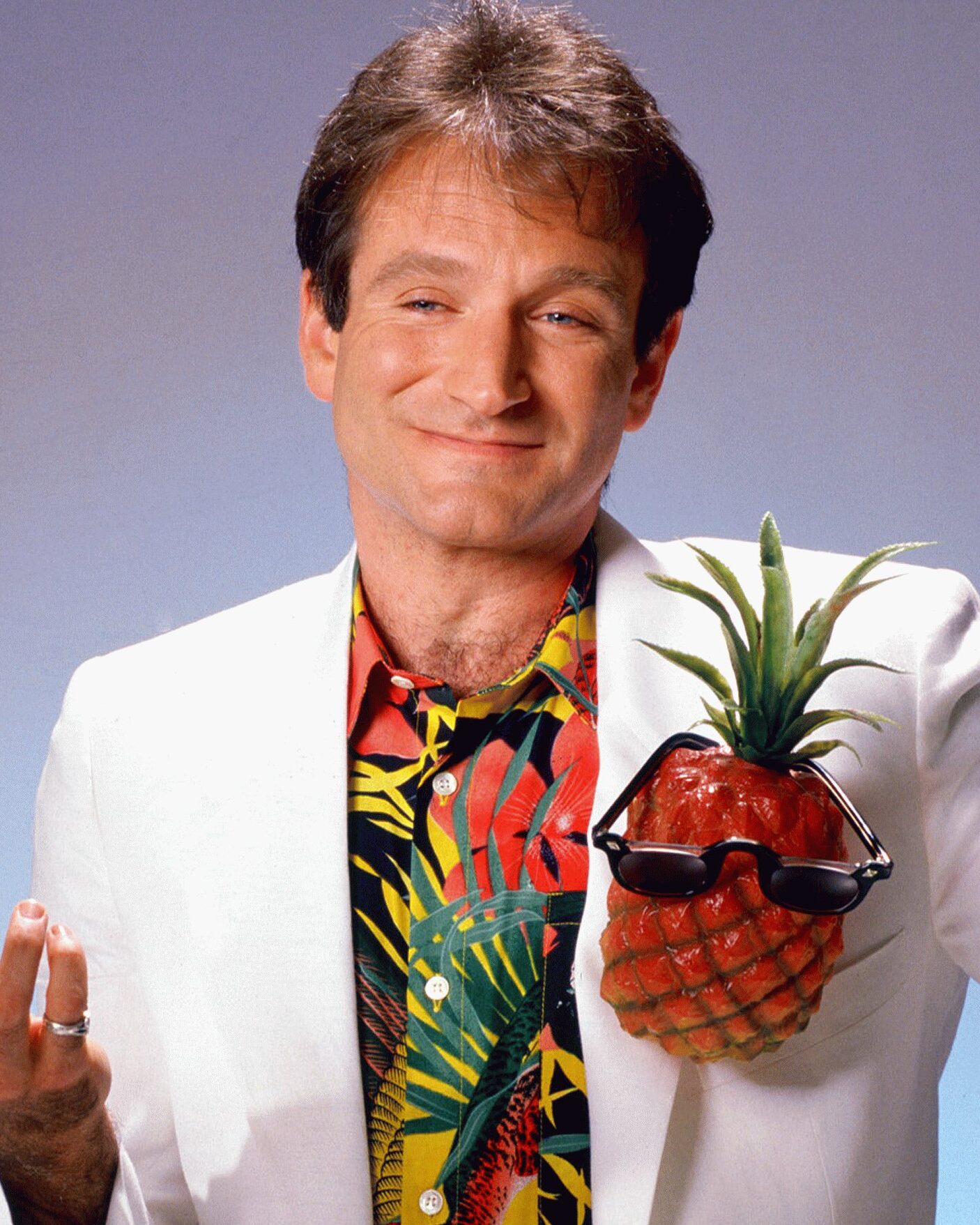
Robin refused to work for Disney until they apologized for their wrongdoing, which resulted in his absence from the film’s sequel. He returned two years later for the franchise’s third movie.
As mentioned, this isn’t the first time Zelda has spoken out against AI recreations of her father. Back in 2023, during SAG-AFTRA’s strike when AI recreations were named a “mandatory subject of bargaining,” she called such uses “personally disturbing.”
“I am not an impartial voice in SAG’s fight against AI,” Zelda wrote at the time. “I’ve witnessed for YEARS how many people want to train these models to create/recreate actors who cannot consent, like Dad. This isn’t theoretical, it is very very real.”
She went on to stress the impact on living performers: “I’ve already heard AI used to get his ‘voice’ to say whatever people want and while I find it personally disturbing, the ramifications go far beyond my own feelings. Living actors deserve a chance to create characters with their choices, to voice cartoons, to put their HUMAN effort and time into the pursuit of performance. These recreations are, at their very best, a poor facsimile of greater people, but at their worst, a horrendous Frankensteinian monster, cobbled together from the worst bits of everything this industry is, instead of what it should stand for.”
Zelda’s words raise a bigger question for all of us: Where do we draw the line between technology and ethics? As AI tools become more powerful, should there be limits on recreating the voices, faces, or performances of people — living or dead — without consent? Or is it just part of the new creative landscape? Let us know what you think in the comments.

Related Posts

This one blood type has the lowest risk of heart attacks and blood clots
Credit: Shutterstock Your blood type might play a role in your risk for serious health issues, including heart attacks, blood clots, and even certain cancers. When it…

“10-80-10” survival principle that could determine whether you live or die in a nuclear attack
Shutterstock.com A nuclear war is something no one wants. However, in a worst-case scenario, the way you react in the first few seconds could mean the difference…
Woman claiming to be Donald Trump’s daughter shares explosive new DNA bombshell
Credit: Getty Images Does Donald Trump have another child? Well, a 55-year-old woman has filed a lawsuit claiming that Donald Trump could be her biological father, stating…
Seconds on the Runway: Tragedy and the Search for Answers
In the span of a few moments, what should have been a routine arrival from Montreal turned into a devastating collision on Runway 4 at LaGuardia Airport. An Air…

The Viral Ceiling Mystery That Turned Into a Real-Life Warning
What started as a strange, almost surreal snapshot quickly pulled people in. A dark, shifting shape peeking through a narrow gap in a ceiling sparked both curiosity…

Late-Night Collision at LaGuardia Raises Urgent Safety Questions
A routine arrival took a tragic turn late Sunday night when an Air Canada Express flight collided with a fire truck at LaGuardia Airport. What should have marked the end…