The international situation in early 2026 is shaped by several overlapping geopolitical tensions, often described by analysts as renewed “pressure points” rather than a single unified crisis. Concerns about large-scale conflict have increased in public discussion.
The ongoing war in Ukraine remains a central factor, now in its fourth year. It continues to strain relations between Russia and Western countries, while instability in parts of the Middle East adds further uncertainty with few clear paths toward resolution.
Beyond regional wars, attention has shifted to broader systemic risks. Nuclear rhetoric has increased, arms control agreements have weakened, and cyber operations targeting infrastructure have become more common. Advances in artificial intelligence and autonomous weapons also raise new strategic concerns.
Public anxiety reflects these developments. Surveys from groups such as YouGov suggest many people in Europe and the United States believe a global conflict is possible within the next decade, often involving nuclear escalation.
However, expert assessments are mixed. Organizations like the Council on Foreign Relations have highlighted several potential flashpoints, including tensions in the Taiwan Strait and risks involving NATO and Russia, while still emphasizing uncertainty in outcomes.
In the United States, discussion of the Selective Service System occasionally resurfaces in public debate. While registration rules exist for eligible individuals, major policy changes or activation of a draft are generally described by officials and analysts as highly unlikely except in extreme scenarios.
Most current frameworks include multiple exemptions or deferments, such as medical disqualification, caregiving responsibilities, essential civilian occupations, and conscientious objection. Historically, these categories significantly limit actual conscription even during wartime.
Overall, while concerns about global instability are widely discussed, most experts emphasize that modern militaries rely heavily on technology, volunteer forces, and deterrence. As a result, large-scale conscription or global war remains a contingency scenario rather than an imminent expectation.

Related Posts

The Deadly Ingredient Hiding in Your Kitchen: Why That Bitter Taste Could Be a Fatal Warning
You may think you’re serving a healthy, home-cooked meal, but an unusually bitter taste could signal something more serious than bad seasoning. Food safety experts warn that…

Viewers Spot a Subtle Detail in Coca-Cola’s Iconic Logo
Some people have noticed that the second “C” in the Coca-Cola logo looks like a smile—and once you see it, it’s hard to ignore. The familiar red-and-white…

A Viral ICU Rescue Clip Wasn’t What It Seemed
A tense hospital video recently spread across social media, showing what appeared to be a nurse rushing to save an unconscious patient in an intensive care setting….

‘Most beautiful girl in the world’ Thylane Blondeau marries French DJ in fairytale Paris wedding
Thylane Blondeau was six when the world decided how she should look. Now 25, she has stepped into a new chapter—one defined on her own terms. Once…

I found this tiny white stick in my son’s room and was too embarrassed to ask him does anyone know what it is?
What I thought was a mysterious gadget turned out to be something surprisingly ordinary. After searching online and comparing photos, I discovered it wasn’t a vape, hidden…
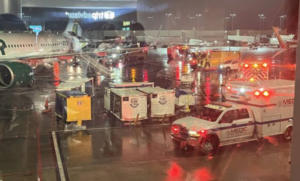
Charlotte Airport Faces Flight Delays Followin
Operations at Charlotte Douglas International Airport experienced temporary delays after a Frontier Airlines aircraft was involved in an unusual ground servicing incident before departure. Although the event…