Ever found yourself scrutinizing the expiration date on your food, debating whether it’s safe to consume that slightly overdue carton of milk or package of chicken? It’s time to demystify those dates. According to the United States Department of Agriculture (USDA), expiration dates are more guidelines for quality rather than hard-and-fast safety deadlines.
Food packages often display terms like “Best if Used By,” “Use By,” and “Sell By,” leading to confusion and unnecessary food waste. These labels primarily indicate the period during which the food is expected to be at its optimal quality and flavor, rather than the point after which it becomes unsafe. Here’s a quick breakdown:
Best if Used By: Suggests when the product will be at its best flavor and quality.
Use By: The manufacturer’s estimate of the last date for peak quality.
Sell By: A guide for retailers on how long to display the product, not a safety date.
A startling 30% of food in America is wasted annually, partly due to misunderstandings about expiration dates. By discarding food based on these dates alone, we’re not just straining our budgets; we’re also exacerbating environmental problems.
Eggs: Can remain safe up to three to five weeks post-purchase. A simple water test can check their freshness.
Chicken and Meat: Safe for a day or two beyond the “Sell By” date if refrigerated, and longer if frozen.
Milk: Often stays fresh about a week past the “Best if Used By” date, provided it smells and looks normal.
Rice and Pasta: These dry goods can last for years if stored properly.
Canned Foods: Safe as long as the can is not damaged. They can last for years.
Frozen Foods: Remain safe indefinitely at 0°F (-18°C), though quality may decrease over time.
While many items are safe past their labeled dates, visible mold, unpleasant smells, odd textures, or bad tastes are unmistakable signs of spoilage. Trusting your senses is often more reliable than relying on printed dates.
Minimizing food waste starts with correct storage. Keep your fridge below 40°F (4°C) and your freezer at 0°F (-18°C). Use airtight containers to protect food quality and extend its life.
In summary, food expiration dates offer a guideline for quality rather than a strict safety threshold. By understanding label meanings, properly storing food, and trusting our senses, we can reduce food waste while ensuring our meals are both delicious and safe. So, think twice before discarding that day-past-due condiment—it may still be perfectly good to enjoy

Related Posts

The Deadly Ingredient Hiding in Your Kitchen: Why That Bitter Taste Could Be a Fatal Warning
You may think you’re serving a healthy, home-cooked meal, but an unusually bitter taste could signal something more serious than bad seasoning. Food safety experts warn that…

Viewers Spot a Subtle Detail in Coca-Cola’s Iconic Logo
Some people have noticed that the second “C” in the Coca-Cola logo looks like a smile—and once you see it, it’s hard to ignore. The familiar red-and-white…

A Viral ICU Rescue Clip Wasn’t What It Seemed
A tense hospital video recently spread across social media, showing what appeared to be a nurse rushing to save an unconscious patient in an intensive care setting….

‘Most beautiful girl in the world’ Thylane Blondeau marries French DJ in fairytale Paris wedding
Thylane Blondeau was six when the world decided how she should look. Now 25, she has stepped into a new chapter—one defined on her own terms. Once…
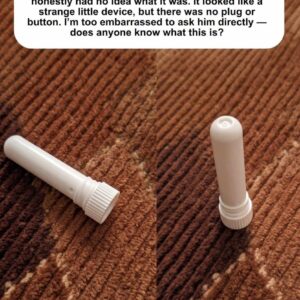
I found this tiny white stick in my son’s room and was too embarrassed to ask him does anyone know what it is?
What I thought was a mysterious gadget turned out to be something surprisingly ordinary. After searching online and comparing photos, I discovered it wasn’t a vape, hidden…

Charlotte Airport Faces Flight Delays Followin
Operations at Charlotte Douglas International Airport experienced temporary delays after a Frontier Airlines aircraft was involved in an unusual ground servicing incident before departure. Although the event…