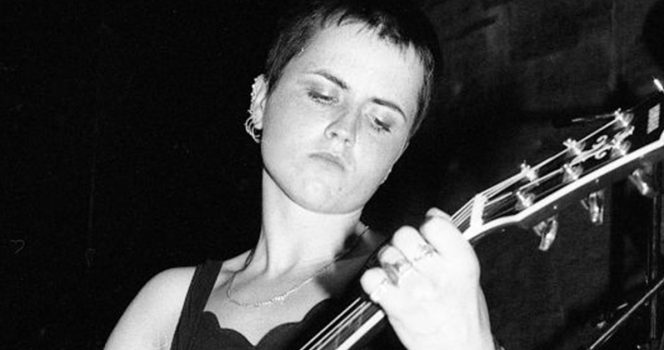
She began singing at just five years old, and by her early teens, she was already writing her own songs.
But behind the scenes, her life was far from easy — and the way it all ended would become a haunting reminder of the demons this extraordinary singer battled.
Grew up in a strict Catholic family
Some call her the greatest female vocalist of all time. Whether you agree or not, there’s no denying that the woman we’re about to tell you about today touched an entire generation. Anyone who grew up with her music will understand.
The singer grew up in a very isolated part of rural Ireland, a place steeped in mystique and old legends. The entire countryside where she was raised was shaped by its rich folklore and timeless stories.
Born on September 6, 1971, in Ballybricken, County Limerick, Ireland, she was the youngest of nine children in a devout Roman Catholic family. Her mother named her after the Lady of the Seven Dolours.
Life wasn’t easy: her father, Terence, had worked as a farm laborer until a 1968 motorbike accident left him with brain damage, while her mother, Eileen, worked as a school caterer.
Despite these challenges, the star was raised in a modest, loving household.
”My childhood was sheltered, pure and trippy in a childlike way,” she once said. ”I talked to birds and cows a lot. I also confided in my dog. He was like my shrink –he never objected or looked disapprovingly at anything I did.”
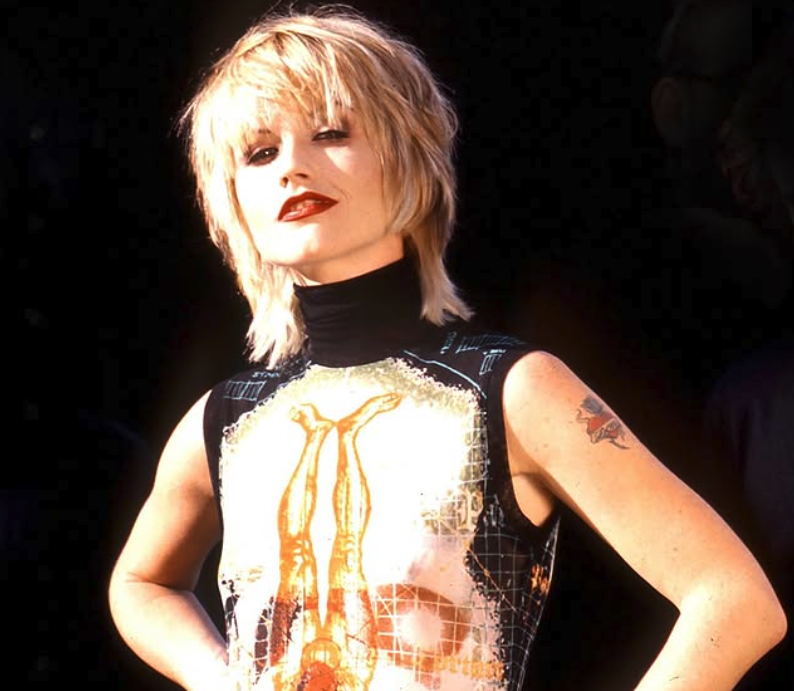
According to several sources, the future artist was singing before she could even talk. By the age of five, her school principal recognized her talent, placing her on a teacher’s desk to perform for a class of twelve-year-olds.
She began with traditional Irish songs and learned to play the tin whistle at school.
When she was seven, a family accident left their home destroyed by fire, but the close-knit rural community came together to raise funds for a new house.
In a 2001 interview with the Sunday Independent, the artist revealed that she was “anti anything that was girlie” until she was 17. She also had to grow up faster than other children, describing a strict daily routine throughout her teenage years that revolved around piano lessons, church, and homework.
At the same time, her wild side was always present — the part of her that would later help her perform on stage in front of millions, completely at ease and enjoying being herself, doing what she loved most. According to her school friend Catherina Egan, she was “boisterous, wild, but lovely”
But it wasn’t immediately obvious that this Irish woman, despite her raw talent, would one day become a global music sensation. Her mother, whom she “adored,” encouraged her to either become a nun or earn a college degree and become a music teacher. Her priest suggested she go to Iceland.
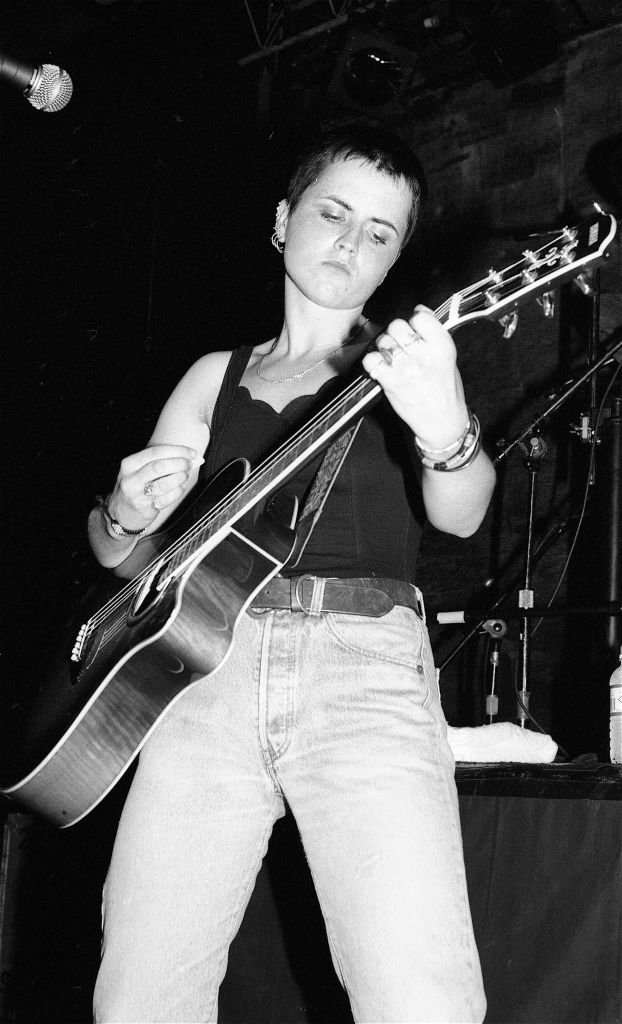
But she followed her own path, running away from home at 18 and spending a few years living with her boyfriend.
”At 18 I left home because I wanted to sing. My parents wanted me to go to college and things like that. I was really poor for a year-and-a-half; I remember actually being hungry, like I’d die for a bag of chips. That’s when I joined the Cranberries,” she said.
In 1990, a local band called the Cranberry Saw Us was searching for a new lead singer when a young, talented singer from Limerick, who had run away from home, stepped in to fill the role. Her name? Dolores O’Riordan.
“She came and sang a few songs she had written,” said the band’s guitarist Noel Hogan. “We were blown away that this small girl from Limerick had such an amazing voice. The fact that she wasn’t already in a band was a miracle.”
The band soon adopted the simpler name, the Cranberries, and Dolores O’Riordan. would go on to become their legendary frontwoman.
At first, she was quite shy on stage, often performing with her back to the audience. But the femininity and the unique Irish tone to her voice was immense and captured hearts everywhere.
“There was no big act,” Hogan recalls. “I think that resonated with people.”
Despite their inexperience, the Cranberries quickly caught the attention of major labels during the Nineties alt-rock frenzy.
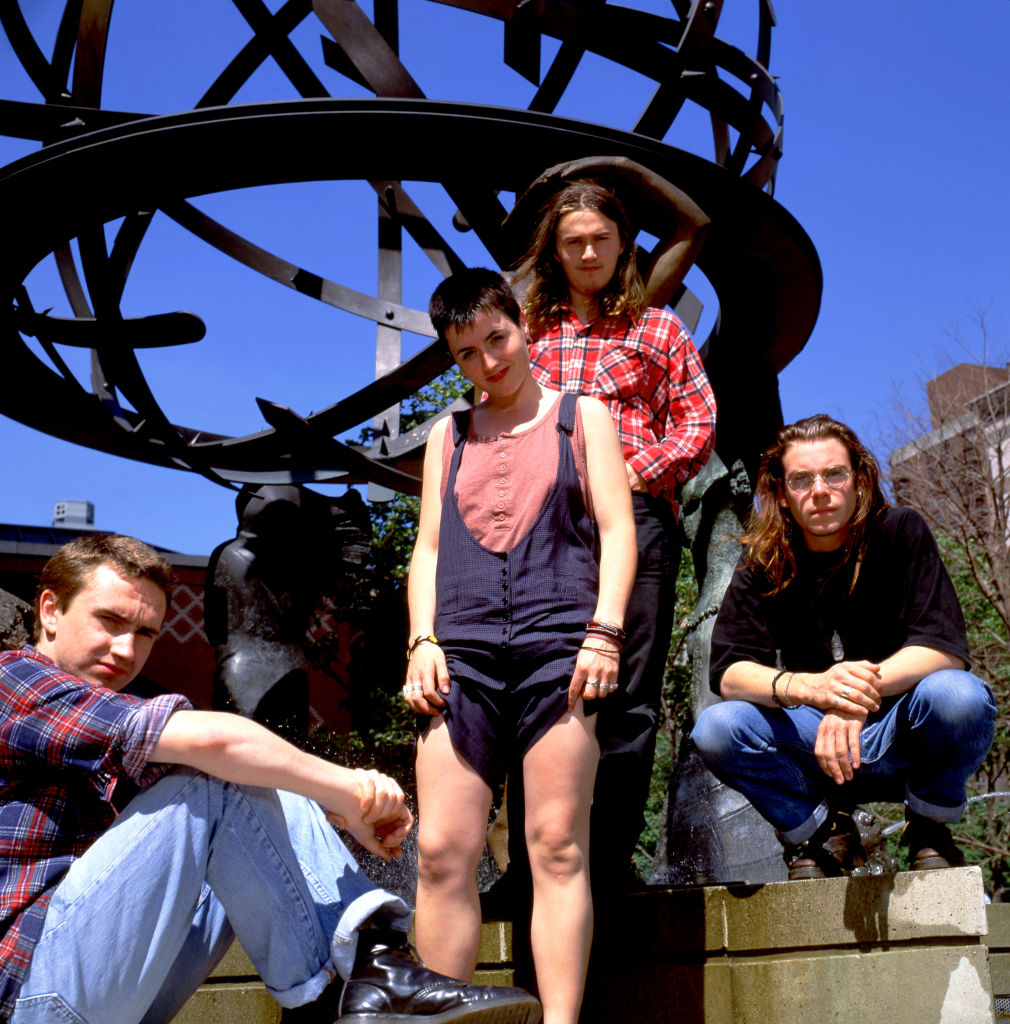
Their 1993 debut, Everybody Else Is Doing It, So Why Can’t We?, produced hits like “Linger” and “Dreams,” fueled by shimmering guitars and the singer’s haunting, powerful voice. Both that album and its 1994 follow-up, No Need to Argue, sold millions of copies, and the band even performed on MTV Unplugged.
Achieving superstardom at such a young age meant O’Riordan “missed out on the freedom” most young people enjoy. In 1995, her Celtic strains made her the highest paid female rock star in the UK. In 2006, she was one of the 10 richest women in Ireland and was reported to be the fifth-richest woman in 1999.
“People watch you. You’re not allowed to slip up because you’re only a kid. So of course you have to make mistakes,” she said.
Over the years, she struggled with depression, profound self‑loathing, and suicidal thoughts, issues that were intensified by the pressures of her rapidly rising career and ultimately contributed to her battle with anorexia.
According to former manager Allen Kovac, Dolores deliberately aimed to set her the Cranberries apart with politically charged lyrics. She wrote their biggest hit, 1994’s “Zombie,” inspired by the deaths of two children in a 1993 bombing in England carried out by the Irish Republican Army. Kovac recalls that Island Records initially urged them not to release it as a single. In his account, she even tore up a $1 million check the label offered to work on a different song.

“Dolores was a very small, fragile person, but very opinionated,” Kovac told Rolling Stone. “Her belief was that she was an international artist and she wanted to break the rest of the world, and ‘Zombie’ was part of that evolution. She felt the need to expand beyond ‘I love you, you love me’ and write about what was happening in Ireland at the time.”
In the summer of 1994, she married Don Burton, tour manager of Duran Duran.
The couple eventually moved to his native Canada and had three children. The singer often spoke about how motherhood became her top priority, saying that having kids transformed her life for the better.
“The kids were actually completely elemental in my healing process,” she told LIFE.
In the same interview, Dolores revealed that she had been molested for four years starting at age eight by someone she trusted.
“I was only a kid,” the rock star told the outlet.
“It gets hard as well when you have daughters because you get flashbacks when you’re with them and when you are watching them. You wonder, ‘How can anyone get satisfaction in any way, you know?’”

Career-wise, the Cranberries faced challenges in the late 1990s. Dolores’ relentless commitment on stage began to take a serious toll. By 1996, exhaustion forced the band to cut a tour short. “I had to fly to Ireland and take her to a doctor,” recalled former manager Allen Kovac.
“He said to her, ‘You’re not healthy enough to tour.’ My belief was you had to deal with those issues, but I don’t think she ever got through.”
While the Cranberries never again reached the commercial heights of their early years — their 2001 album Wake Up and Smell the Coffee peaked at No. 45 — their loyal fan base never disappeared. As the band’s sound grew edgier and more punk-influenced, she remained deeply relatable to listeners who saw their own struggles reflected in her music.
In 2011, she was devastated by the loss of her father, Terence, who died from cancer. “I felt him around me a lot for a while. I could feel him trying to protect me and communicate with me,” she told Billboard the following year.
At her father’s funeral, Dolores came face-to-face with the person who had abused her between the ages of 8 and 12.
He introduced himself and apologized for his past actions. Reflecting on the experience in 2013, she said, “I had nightmares for a year before my father’s death about meeting him. … I didn’t see him for years and years and then I saw him at my father’s funeral. I had blocked him out of my life”.
Another major blow followed in 2014, when her 20-year marriage to Don Burton ended. The split became public shortly after she was arrested and charged in connection with an incident on a flight. In the aftermath, her mother, Eileen, told the Irish Mirror that her daughter was under psychiatric care.
Reflecting on the episode, she later told the Sunday Independent: “Apparently my mother came into the cell. I don’t remember. I had created a tortoise effect. I tucked myself in, under the blanket. I was singing in the cell. I was praying. I was meditating because I was freezing,” while confirming her bipolar disorder diagnosis.
She also revealed to the Belfast Telegraph that she had “tried to overdose” in 2013, but believed she was “meant to stay here for the kids.”
Her struggles with alcohol were equally candid. “I am pretty good but sometimes I hit the bottle,” she admitted. “Everything is way worse the next morning. I have a bad day when I have bad memories and I can’t control them and I hit the bottle. I kind of binge drink. That is kind of my biggest flaw at the moment.”
Tour life, she explained, only made it harder.
“On tour, it was just so easy to say ‘I can’t sleep. I’ve had a couple of drinks. Maybe I’ll take one,’” she told Mirror UK. “Then you take another. Then you don’t wake up. That can happen. I am careful now.”
After the Cranberries disbanded in 2003, Dolores released two low-profile solo albums. The band reunited in 2009, later putting out one of their strongest records, Roses, in 2012.
Despite professional successes, her personal life remained chaotic.
On January 15, 2018, she was found unresponsive in the bathroom of a London hotel room and was pronounced dead at 9:16 a.m. She was 46 years old.
A coroner’s inquest determined that her death was an accidental drowning in a bath, with alcohol intoxication playing a role. Investigators found several empty bottles — five miniatures and a champagne bottle — alongside some prescription medications in her room.

“Dolores went through a lot over the past decade — both highs and lows,” the Cranberries guitarist, Noel Hogan reflected after her death. “But what truly made her resonate with people was her honesty. What you saw was what you got.”
Some of the last messages Dolores O’Riordan left were two voicemails for Dan Waite, a label executive who had worked with the Cranberries in the early 2000s.
In the messages, she spoke fondly of her children and even sang a bit of the Verve’s “Bitter Sweet Symphony,” produced by Youth.
“She was in a good space,” Waite recalled. “I’ve seen a few things saying she was depressed but she was definitely making plans for the week” — including, he adds, dinner with him and his wife.

We all face death twice — the first when our body stops, the second when our name is no longer spoken. Some leave a mark that lasts forever.
It often takes losing an artist to truly grasp their brilliance. Dolores was one of a kind. Rest in peace, Dolores O’Riordan.

Related Posts
Actress and model Cybill Shepherd is now 76 years old and here is what she looks like!
In the late 1980s, Cybill Shepherd was a true romantic figure. The actress became extremely well-known after co-starring with Bruce Willis in the television series “Moonlight Detective…

People point out Artemis II astronauts’ awkward response during Trump call after historic Moon mission
Credit: Manuel Mazzanti/NurPhoto via Getty Images, Joe Raedle/Getty Images A lot of people on social media have zeroed in on an awkward moment between the Artemis II…

Donald Trump says ‘a whole civilization will die tonight’ in bone-chilling ultimatum to Iran
Credit / Getty Images President Donald Trump has issued arguably one of the most terrifyingly morbid statements in recent memory amid speculation that a large-scale military strike…

White House forced to issue statement after ‘Trump is dead’ rumors
Credit: Kenny Holston-Pool/Getty Images, Tasos Katopodis/Getty Images The White House stepped in over the weekend to quell growing online speculation that Donald Trump was undergoing medical treatment…

She Walked In Quietly… Then Became a Diva on Stage
When Kristel Herrera stepped onto the stage, she didn’t come in with loud confidence or big expectations — just a calm presence and a dream. But the…
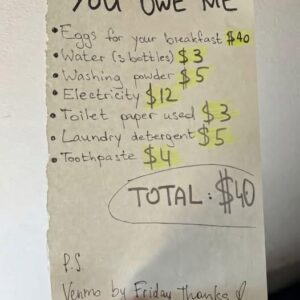
The Shocking Babysitting Bill From My Daughter-in-Law That Sparked the Ultimate Family Revenge and What Happened When I Left Her a Handwritten Note Charging for Every Minute of Love Care and Wisdom
When my daughter-in-law asked me to babysit for the weekend, I expected nothing more than time with my grandson, Oliver—simple, joyful moments filled with laughter, bedtime stories,…