Moles are clusters of pigmented cells which typically pose no threat when stable and symmetrical. However, when a mole changes shape, color, or size—or worse, itches, bleeds, or crusts over—it could be an indication of melanoma or another type of skin cancer. Early detection is critical for successful treatment.
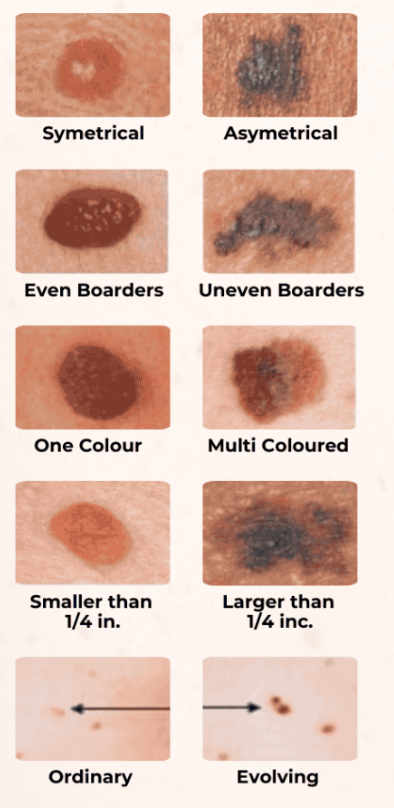
In order to help distinguish between harmless moles and those worth investigating, dermatologists recommend the ABCDE rule :
– Asymmetry : One half of the mole doesn’t match the other.
– Border : Edges are irregular, blurred, or ragged.
– Color : Shades vary within the mole (brown, black, red, white, or blue).
– Diameter : Larger than 6 millimeters (about the size of a pencil eraser).
– Evolving : Changes in appearance over time.
In case any mole fits these criteria, consult a doctor immediately.
Though abnormal moles get much attention, there are other growths that shouldn’t be ignored:
– Actinic Keratoses : Rough, scaly patches caused by sun damage; precursors to squamous cell carcinoma.
– Basal Cell Carcinomas : Pearly or waxy bumps, often appearing on sun-exposed areas.
– Squamous Cell Carcinomas : Firm, reddened nodules or flat lesions with crusted surfaces.
– Seborrheic Keratoses : Harmless brown or black growths resembling stuck-on dirt, though sometimes mistaken for cancerous lesions.
Below are additional red flags to watch for:
– A growth that suddenly appears or grows rapidly.
– Persistent itching, pain, or bleeding around the area.
– Discoloration spreading beyond the border of the mole.
– An open sore that won’t heal.

– Self-Examine Regularly : Check your skin monthly using good lighting and mirrors to spot new or changing growths.
– Consult a Dermatologist : Schedule an appointment if anything looks unusual. Professionals can perform biopsies or recommend removal if necessary.
– Protect Your Skin : Reduce future risk by wearing sunscreen, avoiding tanning beds, and covering up during prolonged sun exposure.
Sarah, a 42-year-old teacher, dismissed a tiny mole on her arm as “just part of getting older.” After months of ignoring its growing size and irregular edges, she finally sought advice from the doctors—and learned it was melanoma. Due to early intervention, surgeons removed the affected tissue before it spread further.
Sarah now advocates for regular skin checks. “Had I waited longer,” she says, “it might’ve been too late.”

– Know Your Family History : Genetics play a role in skin cancer risk.
– Limit Sun Exposure : Stay indoors during peak UV hours (10 AM–4 PM) and wear protective clothing.
– Use Broad-Spectrum Sunscreen : Apply SPF 30+ daily, even on cloudy days.
– Share this information with your doctor.
– Avoid Tanning Beds : They increase melanoma risk by up to 75%.
Not all skin growths are cause for alarm, yet being vigilant ensures peace of mind and timely action if needed. Keep in mind, catching potential issues early significantly improves outcomes. So next time if you notice a suspicious mole or bump, don’t hesitate—get it checked out. Your life could depend on it.
Stay informed, stay proactive, and keep shining bright! ✨🩰

Related Posts
Sandra Bullock Navigates a Difficult Personal Chapter Following a Family Loss
Sandra Bullock has experienced a deeply personal and emotional period in recent years, marked by a private family health struggle. Known for keeping her personal life out…

From Fright to Fascination: The Curious Case of the Red Triangle Slug
It started with a moment of unease—a strange, vivid red shape surrounded by unfamiliar textures, the kind of sight that makes you pause and look twice. A…

Standing Up, Standing Together: A Story of Protection, Mistakes, and Redemption
It started as a simple weekend ritual—breakfast at the same diner, the same table, the same familiar faces. Over time, though, something felt off. Melissa, the usually…

If you hit your head, watch out for these symptoms that can show up even days later
Head injuries are often easy to dismiss. You might bump your head, feel briefly dazed, and continue your day without concern. With no visible injury or immediate…

Scientists Tracked an Eagle for 20 Years—What They Learned
For years, scientists were puzzled by the movements of an eagle fitted with a GPS tracker. Instead of following predictable migration routes, the bird traveled across continents…

Tehran Claims Direct Strike on USS Abraham Lincoln as Regional Conflict Reaches Breaking Point
Tensions in the Arabian Sea have intensified, driven as much by competing narratives as by confirmed events on the ground. Conflicting reports have created uncertainty, leaving observers…