You might have seen these glass or porcelain things on the tops and crossarms of telephone poles, but have you ever wondered what they are and why they’re there? Well, hang tight, because I’m about to spill the beans on these unsung heroes of the communication world.
Insulators, those quirky-looking contraptions, have a vital job. Their purpose is to keep the electrical wires they cradle from having a little chat with the pole or, heaven forbid, the earth below. If they didn’t do their job, all that electricity (or those precious telephone calls) would just leak away. Imagine trying to make a long-distance call when your voice fizzles out after a few hundred feet. Not fun, right?
You’ll find a treasure trove of insulator styles and colors. While many of the older ones were made from glass or porcelain, some were crafted from wood and glass, animal parts (yes, you read that right), and even more bizarre materials. Size matters, too – smaller insulators hung out with the telephone and telegraph crowds, while their larger counterparts partied with the high-voltage electrical wires. It’s like a VIP section for insulators, depending on the voltage!
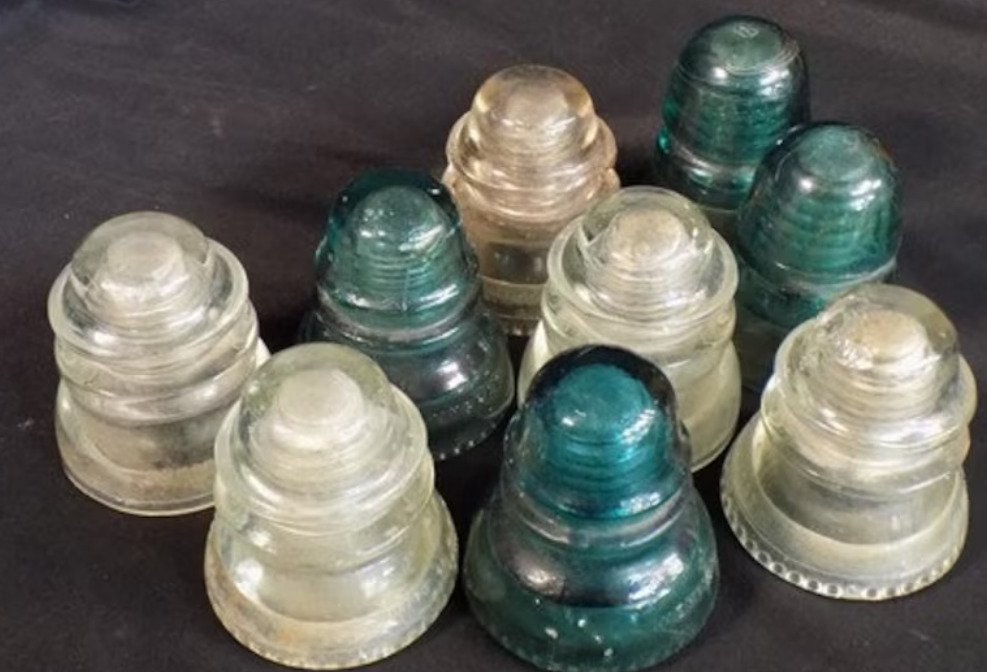
source: Etsy
You see, when it comes to power lines, the higher the voltage, the bigger the insulator needed. Why? Because electricity can be a bit of a show-off, and if the voltage is high enough, it might just decide to jump over a fair distance – a phenomenon known as “flashover.” Insulators with broad “umbrella” disks and wide lower skirts are like the bouncers at the nightclub, ensuring the wire stays at arm’s length from the pole, so this electrifying dance move doesn’t happen.
Believe it or not, insulator collecting is a thing! It really took off in the 1960s when utility and power companies started burying their wires. Many of those vintage insulators couldn’t join the underground party, so they ended up in the “throw out” bin. But, as they say, one person’s trash is another person’s treasure.
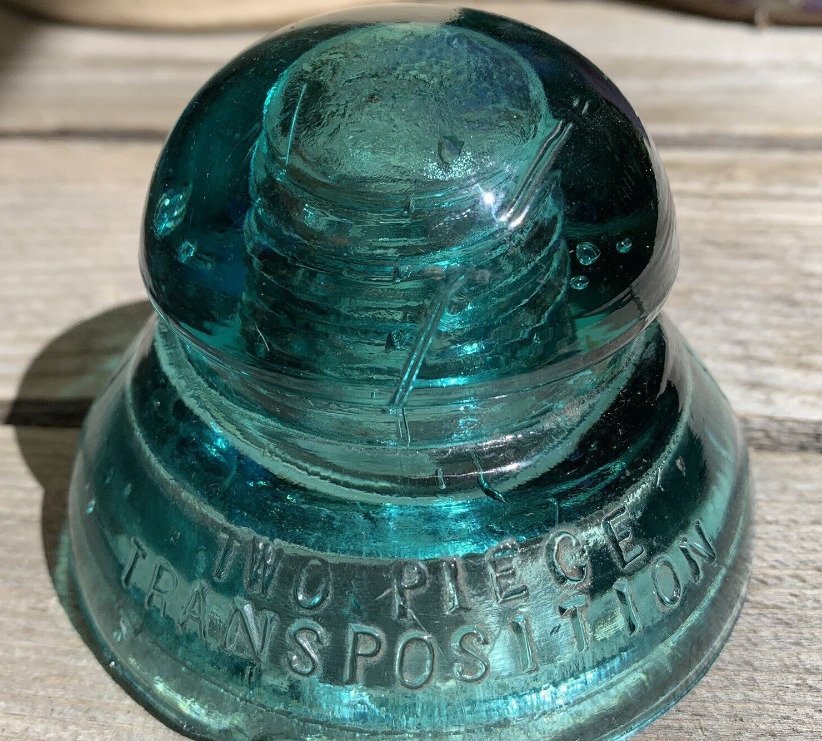
Collectors are a diverse bunch. Some are in it for the aesthetics, adorning their windowsills and gardens with the colorful glass pieces, adding a touch of sparkle to their surroundings. Others are more specific in their tastes, seeking out particular kinds of insulators. The prices can range from freebies to jaw-dropping sums. Rare specimens can fetch tens of thousands of dollars, but there are also plenty of budget-friendly options. You might stumble upon one for less than a dollar or, if you’re lucky, even score one for free at flea markets.
It’s worth noting that most of the insulators in the hands of collectors are between 70 and 145 years old, and some types haven’t been produced since the early 1900s. Anything old and no longer in production tends to become a collectible, and insulators are no exception to this rule.
So, next time you spot one of those quirky glass or porcelain insulators perched high up on a telephone pole, take a moment to appreciate the vital role they’ve played in the history of communication. They may seem like relics of the past, but they’ve left an indelible mark on our ability to connect with one another, whether it’s through a phone call or a lightning-fast text message. And who knows, you might just be inspired to start your own collection, joining the ranks of insulator enthusiasts who find beauty and history in these humble artifacts.
