Long before smartphones, roadside assistance apps, and built-in vehicle emergency systems, drivers relied on simple visual signals to communicate when they needed help. Among the most recognizable of these signals is the white cloth tied to a car’s door handle, antenna, or window. Though many younger drivers may not immediately recognize its meaning, the tradition remains an important part of road safety culture and continues to serve a practical purpose in certain situations.
Historically, a white cloth displayed on a vehicle indicated that the driver was experiencing trouble and needed assistance. The problem could range from a mechanical breakdown and flat tire to an empty fuel tank or another unexpected issue preventing the vehicle from continuing safely. Before mobile phones became common, this visible marker helped passing motorists, law enforcement officers, and highway patrol personnel identify vehicles whose occupants might require help.
Even today, there are situations where this simple signal remains useful. Rural highways, mountainous regions, and remote areas can still have limited cellular coverage. If a vehicle becomes disabled in one of these locations, a white cloth can alert others that the car has not simply been parked but may be associated with a driver who needs assistance or intends to return after seeking help.
The white cloth also serves an important safety function. It can reassure authorities and other motorists that the vehicle has not been abandoned and that its occupants are aware of the situation. In some areas, transportation agencies even recommend displaying a visible marker when leaving a disabled vehicle temporarily on the roadside.
However, experts emphasize that drivers should prioritize modern safety measures whenever possible. Calling emergency services, contacting roadside assistance, activating hazard lights, and remaining in a safe location are generally the most effective responses to a breakdown. A white cloth should be viewed as an additional signal rather than a replacement for professional assistance.
Ultimately, the tradition endures because of its simplicity. It requires no battery, internet connection, or technology—just a visible sign that communicates a universal message: someone may need help. In a fast-moving world, that small piece of fabric remains a reminder that awareness, courtesy, and concern for others still play an important role in keeping roads safer for everyone.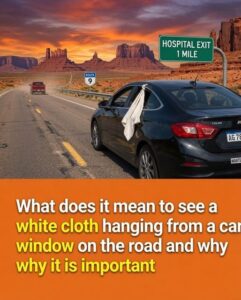

Related Posts
THEIR ACNE IS SEVERE!
When breakouts turn into deep, painful cysts or nodules that never seem to heal, your skin is sending a clear distress signal. These underground bumps rarely come…
Florida Highway Crash Sparks Discussion About Safety and Split-Second Decisions
A recent multi-vehicle accident in Florida has sparked debate after authorities reported that the chain-reaction crash began when a driver slowed or stopped in an attempt to…

Forest Investigation Raises Questions About Wildlife Protection and Public Awareness
A recent investigation in a remote forest area has sparked widespread discussion about wildlife laws, ethical responsibilities, and the importance of respecting protected environments. Authorities became involved…

Community Rallies Together After Major Fire Shakes Millharbor
Residents of Millharbor faced a difficult evening after a major fire spread through several parts of the city, leaving damaged buildings and forcing evacuations in affected neighborhoods….

Arizona Teacher Case Highlights Importance of Community Awareness and Student Safety
A case involving a former sixth-grade teacher in Goodyear, Arizona, has drawn widespread attention and prompted renewed conversations about student safety and the importance of maintaining professional…

A New Beginning Brings Unexpected Revelations After a Painful Divorce
Sarah never imagined that the end of her ten-year marriage would feel so quiet. Sitting inside the mediator’s office, she expected tears and anger, but instead she…