At first glance, the jungle illustration appears to be nothing more than a richly detailed forest scene. Thick, twisting roots stretch across the ground, vines drape from branches, and overlapping leaves form a dense green canopy. Yet hidden within that layered foliage are several carefully camouflaged animals. The striking headline often attached to the image boldly claims that the number of animals you see determines whether you are a narcissist, offering options such as three, four, or five. The statement is designed to provoke curiosity—but it is not grounded in scientific fact.
If you look closely, you may identify a toucan perched along a branch, a sloth hanging quietly from a limb, a snake coiled near the forest floor, a monkey partially concealed among the leaves, and a jaguar or leopard resting low in a shadowed corner. Some viewers immediately notice three animals, while others gradually discover more as their eyes adjust to the visual complexity. The variation in perception depends largely on attention, patience, and pattern recognition—not personality pathology.
The headline’s reference to narcissism taps into popular fascination with the concept. In psychology, narcissism refers to a spectrum of personality traits involving self-focus, confidence, and the desire for admiration. At moderate levels, narcissistic traits can appear as healthy self-esteem or assertiveness. At higher levels, they may involve grandiosity, entitlement, reduced empathy, and a strong need for validation. At its extreme, narcissism may meet criteria for Narcissistic Personality Disorder (NPD), a diagnosable mental health condition assessed through comprehensive clinical evaluation—not through a single visual puzzle.
Optical illusions like this jungle image work because the brain constantly interprets incomplete visual information. Our perception is shaped by experience, focus, and cognitive style. Some people scan broadly and quickly identify large shapes, while others concentrate on smaller details over time. Differences in what viewers see first reflect attentional patterns and visual processing, not moral character or personality disorders.
Ultimately, the jungle illusion is a playful exercise in perception rather than a psychological test. While it may spark self-reflection or conversation, it cannot measure narcissism or any other complex personality trait. The number of animals you see says more about how you observe the world in that moment than about who you are at your core.

Related Posts
What Is Growing on My Head?
I didn’t realize how much power a tiny bump could hold until it started dictating my every waking thought. Each brush of my hair became a reminder…

Reagan-Appointed Judge Steps Down and Speaks Out on the Future of the Justice System
The resignation of longtime federal judge Mark L. Wolf has sparked discussion about the relationship between the judiciary, politics, and public trust in American institutions. Appointed to the federal…

Body Language Expert Analyzes Trump’s Tense Exchange During Television Interview
A recent interview between former President Donald Trump and journalist Kristen Welker has sparked discussion not only about the issues raised but also about the nonverbal communication…

Penny Lancaster’s Vacation Photos Spark Conversation About Confidence and Aging
Recent vacation photos of Penny Lancaster, wife of legendary singer Rod Stewart, have generated lively discussion online after she was photographed enjoying time with her family aboard…

Jesse Ridgway and Wife Share Emotional Story Following Prenatal Diagnosis
Few experiences carry as much anticipation as expecting a child. For many parents, pregnancy is a time of excitement, planning, and hopes for the future, but it…
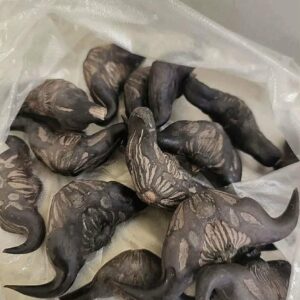
My neighbor gave me a bag of these.anyone know what they are? How do you eat them?
The knock comes, the bag lands on your porch, and suddenly you’re staring at a pile of mystery produce you never asked for. Maybe it’s zucchini, unfamiliar…