Note: we are republishing this story which originally made the news in November 2023.
In a jaw-dropping workplace saga, a mother, identified as Savannah, has left the public stunned after confessing to an unusual tactic to deal with an office creamer thief – she swapped it with her own breast milk.
Savannah initiated this unexpected episode by purchasing a bottle of her preferred coffee creamer and innocently placing it in the communal office fridge. However, her anticipation turned to disbelief as the creamer rapidly vanished over the week. After some sleuthing, she discovered a fellow coworker surreptitiously helping themselves to the communal creamer.
Rather than engaging in a direct confrontation, Savannah devised a unique and attention-grabbing strategy – she substituted the creamer with her own breast milk. A week later, as reported by Daily Mail, Savannah elevated the prank by attaching a note to the container: “Good morning! To whomever has been enjoying my coffee creamer all week… surprise! You’ve been drinking my breast milk. Hope you’ve enjoyed. Cheers!” She added a playful touch with a “PS: It’s organic, so no worries.”
The revelation sparked a lively discussion on social media, with opinions divided between finding the incident amusing and skeptics questioning its authenticity. Some dismissed the story, asserting that nobody would genuinely replace creamer with breast milk, especially in a used container.
The conversation expanded as individuals shared their own encounters with office food and beverage thieves. Strategies ranged from labeling items as “lab experiments” to leaving tempting “bait” like string cheese. Each recounted story added a layer to the ongoing debate on the most effective ways to deter thieving coworkers.
Reactions varied widely, with some advocating for more severe retribution, such as adding laxatives to the creamer, while others defended the harmless nature of the breast milk swap. Supporters even argued that, if anything, breast milk provided a healthier alternative compared to store-bought creamers.
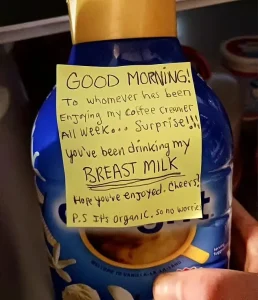
This eyebrow-raising incident has sparked a broader conversation about workplace etiquette, retribution, and the lengths individuals might go to protect their personal belongings. While skepticism persists, the anecdote has certainly become a talking point, showcasing the creativity people bring to addressing workplace challenges.
As we navigate the intricacies of office dynamics, one thing is clear – unexpected twists and tales of inventive retaliation keep workplaces engaging and lively. Stay tuned for more workplace anecdotes and the spirited discussions they inspire.
Sources: The U.S. Sun

Related Posts
The Golden Bachelorette was contacted by a well-known celebrity
ABC was selecting a number of women to be the stars of the next “The Golden Bachelorette” series a few months ago. It’s interesting that they contacted…
THEIR ACNE IS SEVERE!
When breakouts turn into deep, painful cysts or nodules that never seem to heal, your skin is sending a clear distress signal. These underground bumps rarely come…

Florida Highway Crash Sparks Discussion About Safety and Split-Second Decisions
A recent multi-vehicle accident in Florida has sparked debate after authorities reported that the chain-reaction crash began when a driver slowed or stopped in an attempt to…

Forest Investigation Raises Questions About Wildlife Protection and Public Awareness
A recent investigation in a remote forest area has sparked widespread discussion about wildlife laws, ethical responsibilities, and the importance of respecting protected environments. Authorities became involved…

Community Rallies Together After Major Fire Shakes Millharbor
Residents of Millharbor faced a difficult evening after a major fire spread through several parts of the city, leaving damaged buildings and forcing evacuations in affected neighborhoods….

Arizona Teacher Case Highlights Importance of Community Awareness and Student Safety
A case involving a former sixth-grade teacher in Goodyear, Arizona, has drawn widespread attention and prompted renewed conversations about student safety and the importance of maintaining professional…